Shop By Category
Related Links
How to Punch Weep Holes in Aluminum Extrusions in Seconds
-
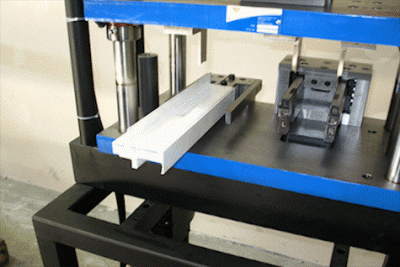 Weeps Hole In Aluminum Cladding Profiles
Porta Press Weep Hole Punching: Clean, Burr-Free Extrusion Drainage
How do you punch weep holes in aluminum extrusions?
To punch weep holes in aluminum extrusions, fabricators use a compact pneumatic press like the Porta Press by Punch Tools. The tool aligns with the profile and uses air-powered shearing dies to punch clean, burr-free drainage slots in under two seconds—eliminating manual drilling, metal shavings, and surface scratches on window frames, cladding tracks, and sill screeds.
Water management is the single most critical factor in exterior wall assemblies, window frames, and cladding installations. Without effective wall drainage systems and weep tracks, trapped moisture causes structural damage, mold, seal degradation, and costly callbacks.
While drainage is non-negotiable, traditional manual drilling is inefficient. Drilling weep holes in aluminum cladding profiles, window tracks, or stucco weep screeds is slow, inconsistent, produces razor-sharp burrs, and risks scratching powder-coated or anodized finishes.
The Porta Press by Punch Tools replaces slow manual drilling with a compact, portable pneumatic press engineered to punch clean, precise weep holes and drainage slots in aluminum extrusions in seconds.
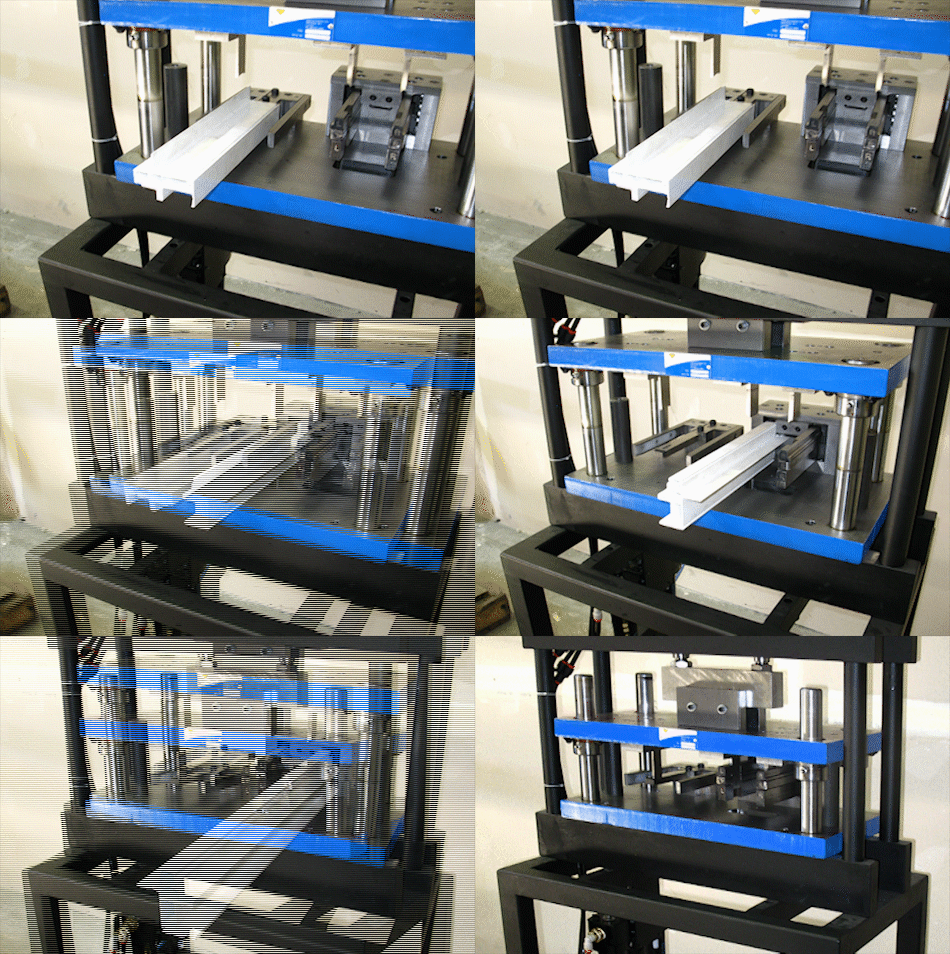 Example: Single-piece extrusion achieving interior and exterior drain holes in seconds.
The Challenge: Drilling vs. Pneumatic Punching for Extrusions
Aluminum extrusions used in fenestration, lift & slide multi-door tracks, and rainscreen cladding feature complex geometries, internal webs, and angled legs. Drilling these profiles introduces several operational bottlenecks:
- Excessive Labor Costs: Drilling individual drainage holes across hundreds of feet of window tracks, sill screeds, or metal flashings consumes valuable shop floor hours.
- Burrs and Metal Filings: Twist drills create sharp burrs inside the chamber, catching debris and restricting water flow over time. Loose aluminum shavings also pose a scratching risk to finished coatings.
- Irregular Hole Geometry: Standard drill bits are restricted to circular holes. Effective weep systems often require oblong slots or shaped notches to maximize airflow and water discharge.
- Multi-Wall Obstacles: Drilling through multi-chambered profiles without deforming outer walls or slipping on angled webs is difficult without custom jigging.
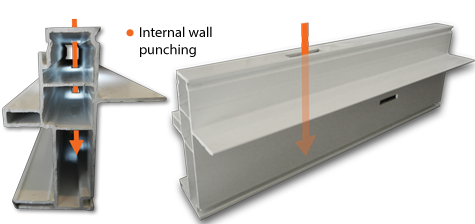 Cross-section profile view with clean punched slots
A dedicated pneumatic press like the Porta Press solves these issues by shearing clean holes through the material in a single stroke without twisting, tearing, or deforming the surrounding profile wall.
Primary Applications for the Porta Press
1. Aluminum Window Frames, Storefronts & Curtain Walls
Modern commercial window assemblies and curtain wall pressure plates require strategically placed weep holes along the bottom frame and interior chambers to allow condensation and wind-driven rain to escape. The Porta Press handles high-volume slotting across standard horizontal sills and intricate profiles.
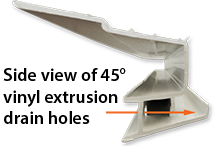 X-ray view of internal channels and drain paths
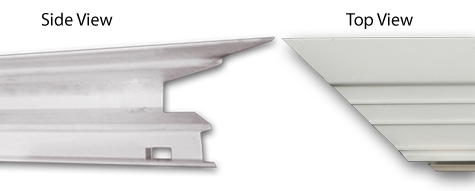 Varied drainage placement along profile walls
2. Sliding Glass Doors & Lift & Slide Multi-Door Tracks
High-performance sliding glass doors and lift & slide multi-door tracks feature deep, multi-chambered sill extrusions designed to handle significant water volume during heavy storms. Punching drainage slots into multi-chambered tracks requires consistent throat depth and custom tooling clearance, ensuring water moves rapidly out of the track without pooling around roller assemblies.
3. Weep Holes in Aluminum Cladding Profiles & Rainscreens
In rear-ventilated rainscreen wall systems, horizontal aluminum cladding tracks and hat channels require drainage paths at panel bases. Pneumatic punching ensures uniform spacing and clean openings that maintain the ventilation gap needed for pressure equalization.
4. Sill Screeds, Weep Screeds & Metal Flashing in Stucco
At the base of stucco and masonry wall systems, sill screeds, weep screeds, and metal flashing act as the primary exit path for subsurface drainage for stucco. Punching uniform weep patterns across metal flashing ensures compliance with building codes while keeping installation schedules on track.
Screw Chasers & 45° Corner Drain Placement
In addition to standard profile slotting, Punch Tools engineers custom dies that mate perfectly with the frame's interior screw chaser channels and 45° miter joints, allowing for drainage placement directly at or near corners without interfering with assembly fasteners.
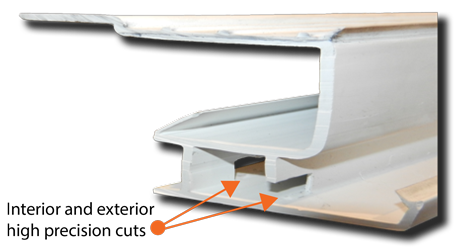
- High precision interior and exterior cuts
- 45° ends, at or near corners
- Clearance for screw chasers to pull extrusions together for a seamless joint
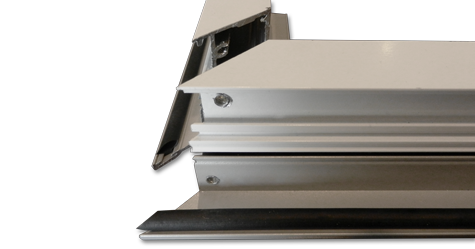 Front view of window corner assembly
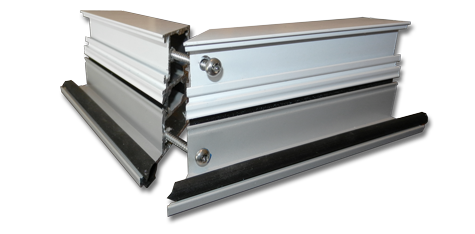 Detail of aluminum corner joint
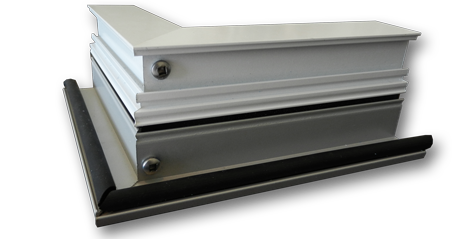 The screw chasers pull the extrusions together for a seamless joint while preserving drainage clearance.
Porta Press & Specialized Punch Station Features
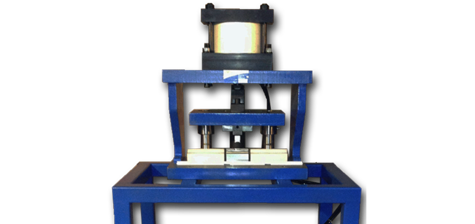
Key Tooling Features
- Pneumatic Power Output: Generates high-tonnage force using standard shop compressed air with simple foot pedal or hand controls.
- Portability & Versatility: Compact footprint allows seamless transition between shop workbenches and jobsite staging areas.
- SolidWorks® Engineered: All punch stations designed in 3D for exact profile matching and internal mandrel support.
- One-Bolt Punch Replacement: Unique punch blade design for rapid blade swaps and minimal maintenance downtime.
- Burr-Free Shearing: Clean, smooth edges that prevent water surface tension hold-back and maintain uninterrupted flow.
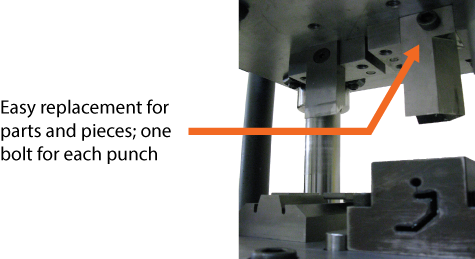 One-bolt removal system for quick maintenance
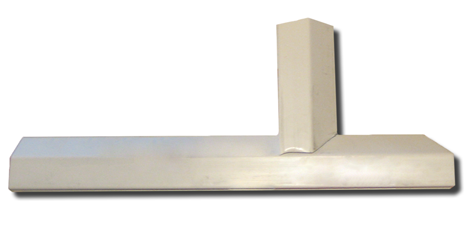 Mating pair cut on aluminum muntin bar
Frequently Asked Questions
Why is pneumatic punching better than drilling weep holes?
Pneumatic punching is significantly faster than drilling, eliminates razor-sharp metal burrs and loose aluminum shavings, and allows for custom slotted or notched hole shapes that maximize water drainage without scratching powder-coated or anodized finishes.
Can the Porta Press punch holes through multi-wall extrusions?
Yes. By utilizing custom internal mandrel dies and precision alignment stops, the Porta Press can punch through multiple interior walls and hollow chambers without collapsing outer extrusion legs.

PTI Punch Tools Inc
11-211 Schoolhouse Street
Coquitlam, BC, Canada. V3K4X9
604-521-6444 | 1-800-668-4996

© 2026 PTI Punch Tools Inc. All rights reseved
Powered by Digit Art Designs Ltd.
