
Are Your Current Louvre Operations Slowing Down Production?
Many sheet metal fabricators still spend valuable production time pre-slitting material before forming louvres. That extra step adds cycle time, extra handling, and extra labor cost — and worn tooling on top of that means expensive replacements and unplanned downtime. Punch Tool's Louvre Tool removes the pre-slitting step entirely and cuts that cost out of your process.
High-Efficiency Metal Fabrication Tooling Solutions
Produce Louvres Faster with Punch Tool's Louvre Tool
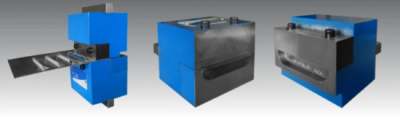
Demonstration: the multi-station Louvre Tool inside a press brake setup.
The Punch Tool Louvre Tool combines slitting and forming into a single press cycle. Instead of running material through two separate operations, the tool completes both at once — cutting a full processing step out of your workflow.
It's built on a North American-style holder, with a tooling adapter available for quick length adjustments, so it drops into your existing press setup without a retool.
| Feature | Capability & Benefit |
|---|---|
| Material Capacity | Up to 12-gauge stainless steel & mild steel |
| Operation Style | Simultaneous slitting and forming in one cycle |
| Holder Interface | North American-style (tooling adapter available) |
| Die Maintenance | Four-sided rotating die block for extended life |
Why Fabricators Choose the Louvre Tool
Good tooling pays for itself in fewer steps, less downtime, and more consistent parts. Whether you're running short batches or high-volume production, this tool is built to hold up to daily use.
-
Fewer production steps — slitting and forming happen in the same cycle, so pre-slitting layouts come off your floor entirely.
-
Lower maintenance cost — heat-treated, replaceable cutting and forming inserts stretch out sharpening intervals.
-
Consistent parts — clean, uniform louvre profiles run after run, with no drift in quality over long production runs.
Frequently Asked Questions
How does the Louvre Tool improve manufacturing times?
It combines slitting and forming into one continuous press brake operation, so the separate pre-slitting stage is removed from the process completely.
What thickness of steel can the Louvre Tool punch?
It's built to handle up to 12-gauge stainless steel and mild steel in standard industrial sheet gauges.
Can components of the tooling be replaced when worn?
Yes. The cutting and forming inserts are heat-treated and replaceable, and the four-sided rotating die block gives you four wear surfaces before the die needs replacing.